Table of Contents

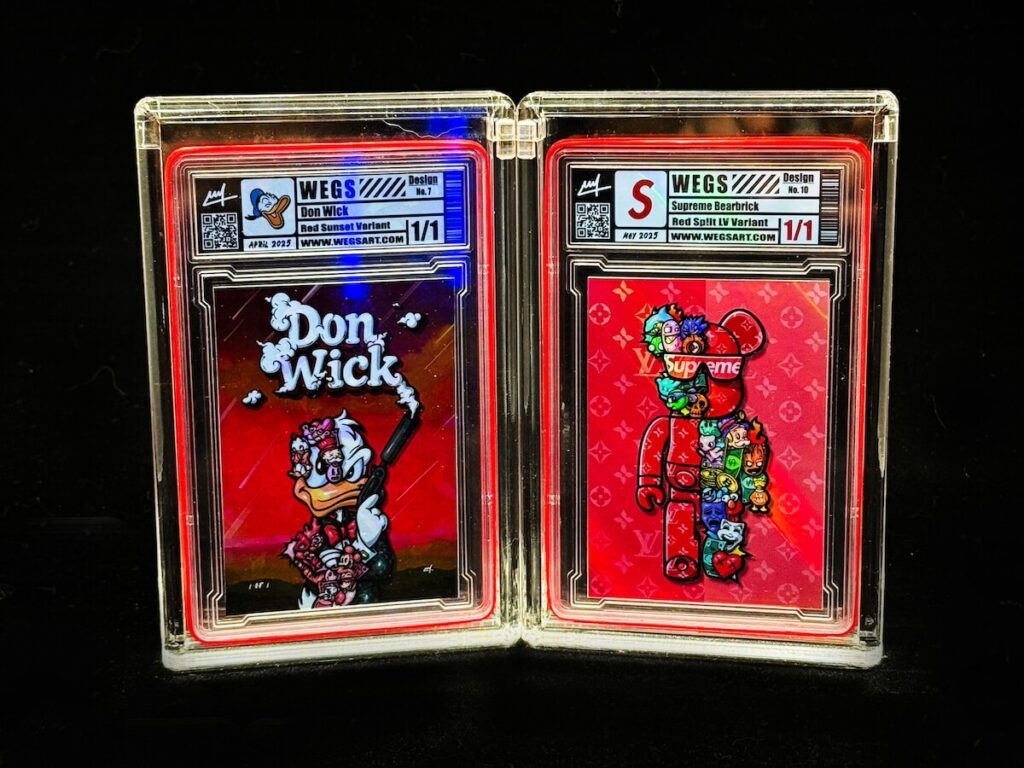
Wegs Don Wick And Supreme Bearbrick Red Variant Cards

Introduction: From Trading Cards to Art Cards

For decades, trading cards were tied to sports, games, and nostalgia. Baseball rookies, Pokémon decks, comic-book heroes, these were the staples of childhood binders and collector shoeboxes. But over the last decade, something new has emerged: art cards.

Art cards take the familiar format of trading cards but reimagine them as miniature works of art. They are often produced in small batches, sometimes even one-of-ones, and created by independent artists or collectives. Instead of being tied to a team or a franchise, art cards reflect creativity, social commentary, and visual storytelling.

What makes art cards so exciting is their hybrid identity. They are collectible, like traditional trading cards, but they also belong to the lineage of zines, prints, and street art. They move between nostalgia and fine art, between sneaker drops and gallery shows. And most importantly, they’re helping to build a new global community of collectors and creators.

What Exactly Are Art Cards?

Art cards are handmade or small-run printed cards designed by artists. They come in a variety of styles:

  • Original hand-painted one-of-ones (true miniature paintings on card stock).
  • Limited edition runs with foil, embossing, or layered textures.
  • Digital designs printed in micro-batches, sometimes paired with NFTs or digital certificates.
  • Carved or sculpted cards, where the medium itself becomes 3D.


The defining traits are creativity, scarcity, and intentionality. Unlike mass-produced sports cards, art cards emphasize originality and the artist’s voice. Each release is an event, and each card carries a story.

Why Art Cards Matter

  1. Accessibility of Art: They bring high-concept art into a collectible format that feels attainable.
  2. Community Building: Collectors and artists interact directly, creating vibrant social ecosystems on Instagram, Discord, and at conventions.
  3. Cultural Commentary: Many art cards remix pop culture, sports, or politics, turning familiar icons into new symbols.
  4. Investment Potential: Like limited edition prints, certain art cards appreciate in value, becoming grails within the community.
  5. Creative Freedom: Independent artists can experiment without the limits of large publishers or brands.

Major Players in the Art-Card Scene

The art-card world is diverse, but here are some of the standout names shaping the space right now:

PiggyBanx

Often called the holy grail of art cards, PiggyBanx is known for concept-driven masterpieces that fuse material, metaphor, and cultural commentary. Their Gandhi coin portrait, where “change” is both literal and symbolic, is a perfect example of why collectors treat PiggyBanx like a canon-defining studio.

WEGS

A powerhouse in design, WEGS is recognized for sleek, high-energy visuals that remix sports and pop icons. His drops often blur the line between luxury branding and gritty street energy. Scarcity and polish make his cards highly sought after.

Jordan Spector

Jordan Spector bridges the gap between fine art and card design. Known for his sports-inspired artworks and murals, Spector brings a painterly realism to the format. His cards resonate strongly with fans who want artistry grounded in athletic iconography.

Glu3Trap

Edgy and experimental, Glu3Trap is a rising name whose cards often lean into darker themes and bold textures. Collectors see him as a boundary-pusher, someone unafraid to experiment with unconventional design language.

The Case Hitmen

Known for high-concept and thematic runs, The Case Hitmen deliver drops that feel like curated events. Their branding and attention to edition design create buzz every time they release.

Onemizer

An established French street artist, Onemizer has brought his graffiti-inspired flair into the art-card format. His cards channel the same vibrancy as his murals, full of spray textures, bold strokes, and urban energy.

Kings Collectives

A collective rather than a single artist, Kings Collectives represents collaboration in the art-card scene. Their work often integrates multiple voices and styles, creating eclectic and unpredictable releases.

SugrAddictz

With a focus on raw, chaotic energy, SugrAddictz brings a rebellious spirit to the card space. Their cards often look torn from a street wall or tagged subway, perfect for collectors who love punk aesthetics.

Nimzzy

Nimzzy is carving a lane with sleek, futuristic visuals. Their style often feels digital-forward: glossy, vibrant, and attuned to gaming and cyberculture influences.

Loot Box Art

True to the name, Loot Box Art thrives on the thrill of chance and discovery. Their drops often include mystery elements, surprise variants, and unexpected finishes, making the collecting experience as exciting as the art itself.

Takashi Murakami

While already a global fine-art superstar, Takashi Murakami has embraced card culture with his Flowers series. Murakami’s cards carry the same pop-art joy and playful philosophy as his gallery works, blurring the line between fine art and collectible ephemera.

Styconics

As covered in a previous Cardboard Junkie spotlight, Styconics is a fan favorite for his fusion of sports, luxury aesthetics, and street-inspired visuals. His Kobe S-Class 1/1 is already considered a landmark in the movement.

The Card Carver

Unique among the lineup, The Card Carver literally sculpts art into the card medium. His works are cut, layered, and dimensional, pushing the boundaries of what a trading card can physically be.

Collectors Creative

A community-driven brand, Collectors Creative combines curation with creation. Their drops often showcase collaborations with multiple artists, helping introduce fresh voices into the scene.

The Collector’s Perspective

Ask any serious art-card collector and they’ll tell you: collecting is as much about community as it is about the cards themselves. People don’t just buy, they share stories, trade, document drops, and support the artists directly. Instagram has become the central gallery, while Discord groups function like clubs where collectors exchange knowledge, arrange trades, and debate which artist is pushing the culture forward.

For newcomers, this means you’re not just entering a marketplace, you’re joining a living, breathing culture.

Where to Start as a New Collector

If this is your first exposure to art cards, here are some steps:

  1. Follow Artists & Studios: Instagram is the hub. Start by following the names above.
  2. Engage in Communities: Discords and collector groups offer insight, trade opportunities, and drop alerts.
  3. Start Small: Don’t chase grails right away. Buy pieces that resonate with you personally.
  4. Learn the Language: Terms like “1/1,” “variants,” “grails,” and “drops” are part of the culture.
  5. Support the Artists: Many are independent; purchasing directly means you’re helping the scene grow.

The Future of Art Cards

The movement is still young, but it’s evolving fast. Expect:

  • Crossovers with fashion and sneakers (limited apparel tied to card drops).
  • Museum exhibitions and gallery shows that place art cards alongside zines and prints.
  • More sculptural and multimedia experiments, as artists test the limits of cardboard.
  • Institutional recognition, with grading companies, auction houses, and critics giving art cards more visibility.

Conclusion: A New Chapter in Collecting

Art cards are more than a trend, they are a new language of collecting. They fuse the thrill of the chase with the gravity of art. They connect people across continents in shared appreciation. And they give artists a platform that’s both intimate and global.

Shea Winter Roggio